The Trojan Horse..
In Greek mythology, the Trojan Horse was a ruse used by the Greeks to breach the city of Troy during the war fought between them and the Trojans. That war, in which the Greeks laid siege to the city of fortresses and formidable walls for a full ten years, drove them to devise a deception by which they made the people of Troy believe that the siege had been lifted and that the Greeks had withdrawn, leaving behind a gigantic wooden horse as a kind of gift to the victors, which came to be known as the “Trojan Horse.”
When the Trojans found the horse, they rejoiced at their victory over the Greeks and brought it into the city, while the Greeks were hiding inside it a number of their fiercest and most skilled fighters. When night fell, the Greek warriors emerged from the belly of the wooden horse, slipped to the city gates, and opened them, which made it easy for the Greek army—hidden with its ships behind the mountains—to advance and enter the city.
The Greek ruse succeeded, and they seized the town that had resisted penetration for an entire decade, which by the standards of our time would amount to a century. Since then, the term has been used to denote deceiving the enemy from within by recruiting elements from among its own followers and inserting them into its camp.
In truth, this is precisely what happened to us in what came to be called the Arab Spring. With the beginning of the 1990s of the twentieth century, a new unipolar world order emerged under the leadership of the United States of America, based on the disintegration of the other power, namely the Soviet Union. The Second Gulf War was the first declaration of this order’s approach to dealing with international crises through an international coalition led by the United States against what was termed the “rogue state,” in order to compel it to conform to this order.
This system then evolved such that the United States of America, relying on its own capabilities and with limited participation from its allies, undertook the implementation of its strategic objectives, particularly in the field of the war on terror that ignited at the beginning of the third millennium and targeted many areas of the Middle East as direct objectives. There, America applied its new strategy of preemptive strikes, employing weapons systems and command-and-control structures unprecedented on a global level.
This dominance was not the product of chance. Since the Second World War, America had planned to leap to the summit of the world without a rival. The new world order targeted the Middle East in particular, and on its land and around it unfolded numerous wars, crises, and attempts at polarization, which America did not manage alone but rather with full or limited participation from the North Atlantic Treaty Organization, regarded as the long arm of the new world order, whose survival Washington was keen to ensure despite the dismantling of the Warsaw Pact following the collapse of the Soviet Union.
Matters did not stop there. The alliance evolved from being merely a military mechanism to defend Europe against the former Soviet Union into a political-military administration for managing crises around the world in the interest of the West. The United States was keen to preserve it in order to thwart European intentions to form an independent military force that might one day become hostile to it, and it compelled European states to accept the idea of the alliance’s continuation and support as the sole option. Through this support, Washington was able to achieve its strategy while shifting its costs onto the European states on its behalf.
Sykes–Picot:
During the outbreak of the Iran–Iraq War in 1980, U.S. National Security Advisor “Brzezinski” stated that the dilemma the United States would face from that point onward was how to activate a second Gulf war, conducted on the margins of the first Gulf war, through which America could correct the borders of Sykes–Picot.
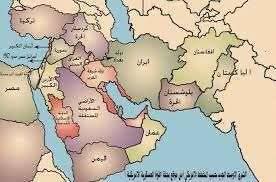
Following this statement, and at the behest of the Pentagon, the late British Jewish orientalist “Bernard Lewis” began in 1981 to formulate his famous project aimed at dismantling the organic unity of the entire group of Arab and Islamic states, each separately, including Iraq, Syria, Lebanon, Egypt, Sudan, Iran, Turkey, Afghanistan, Pakistan, Saudi Arabia, the Gulf states, and the states of North Africa, among others, transforming them into a collection of cantons and small ethnic, religious, doctrinal, and sectarian entities. He attached to his detailed project a set of maps drawn under his supervision, covering all the Arab and Islamic states slated for fragmentation, inspired by the substance of the “Brzezinski” plan.
In 1983, the U.S. Congress unanimously approved the project in a secret session; it was codified, adopted, and incorporated into the files of U.S. strategic policy in the subsequent years. Its mechanisms and implementation plans were set, and these moves were completed in the aftermath of the end of the Cold War and the dismantling of the Eastern bloc at the beginning of the 1990s.
The Greater Middle East:
The practical implementation of the idea on the ground began with the U.S. National Security Commission—a federal advisory committee known as the “Hart–Rudman” Commission—issuing a major report in February 2001 entitled:
“The New Global Security Environment in the First Quarter of the Twenty-First Century.”
The report included a number of studies and research papers on different regions of the world, among them what the report calls the “Greater Middle East.” The report defines this region as comprising the Arab world, Israel, Turkey, Central Asia, the Caucasus, and the Indian subcontinent region, and it represents—according to the report—the largest energy repository in the world.
The Washington Post was the first to disclose this new American initiative when it reported on February 9, 2004, that the administration of U.S. President George Bush was working to craft an ambitious initiative to promote and spread democracy in the “Greater Middle East,” by reconfiguring a model previously used to exert pressure for the spread of freedoms in the Soviet Union and Eastern Europe.
Senior officials in the White House and the State Department had already begun talks with key European allies to draw up a comprehensive blueprint to be presented at the summits scheduled for 2004 of the Group of Eight, the North Atlantic Treaty Organization, and the European Union, in Istanbul, Turkey.
The alliance worked to promote the project by advancing appealing ideas such as comprehensive development, economic prosperity, providing jobs for the unemployed, implementing democracy, liberation and emancipation from conditions of oppression and political repression, and encouraging non-governmental civil society organizations to rebel—in one way or another—against existing political systems under the pretexts of freedom according to the American perspective, and by allocating vast financial appropriations from the White House budget to support the activities of these organizations, which in this case were assumed not to oppose any American orientations.
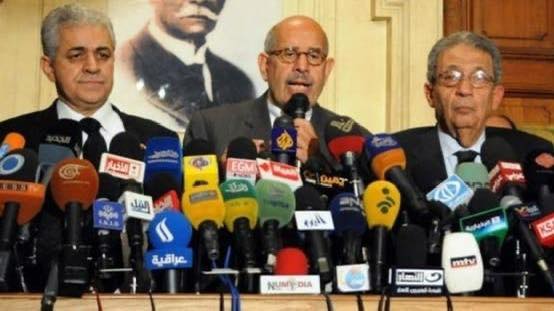
The Muslim Brotherhood, and organizations such as “April 6,” the “National Association for Change,” and the “Revolutionary Socialists,” along with individuals like ElBaradei and his well-known entourage, were the Trojan Horse that the United States and NATO needed to enter the Arab region—at its heart Egypt—and fragment it from within. The first signs of this began in January 2011, exploiting widespread popular anger resulting from policies that some believed had led the country toward the preliminaries of a revolution that notably lacked the requisite internal conditions.
In truth, the attempts of those forces have not ceased, especially after the great Egyptian people, supported by their armed forces, broke that scheme on June 30, 2013. This compels us to keep our eyes wide open regarding the coming phase, and regarding infiltrated organizations led by groups belonging to the fifth column, in order to prevent the Trojan Horse from entering our country once again.
Paris – five o’clock in the evening, Cairo time.